On time across the river roads
Timely updates and a clear window for our arrival.
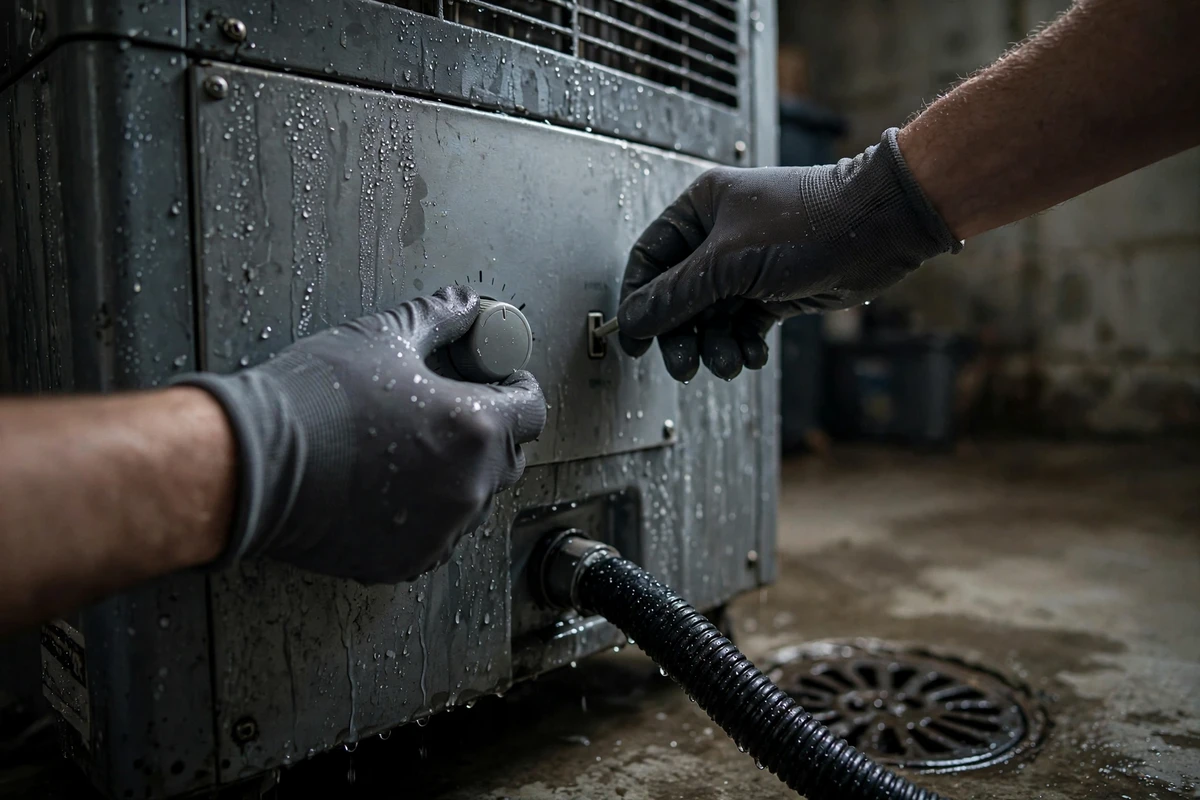
Kearny homeowners get mold remediation from a team that knows brick doubles near the town center, converted industrial spaces by the river, and post-war capes in North Kearny. Proximity to the Passaic River and older homes keeps humidity and water damage common, so our team uses thermal imaging, moisture meters, and HEPA filtration to inspect, remediate, and verify each job.
Timely updates and a clear window for our arrival.
Look over the approach and plan first, then decide.
Crews arrive stocked and leave the work area tidy.
Local crews who stay on the job until it is done right.
We've worked in just about every kind of Kearny building , the brick doubles near the town center, the converted industrial spaces by the river, the post-war capes up in North Kearny. That local mileage matters: we know where this town's homes trap moisture and how to fix it without tearing your place apart. Thermal imaging, moisture meters, HEPA filtration , the right tools, in the hands of people who know Kearny's housing stock.

Kearny's climate and older building stock keep mold work in steady demand. Our team answers around the clock, so residents can reach help right when a problem shows up. The service range covers the situations Kearny homeowners run into most.
Dark patches of black mold can affect the air your family breathes, so we treat this growth with care. In Kearny, our crew clears it with HEPA vacuums and mold inhibitors, then checks the area to confirm the growth is gone.
View service →02Hidden mold often sits behind walls or under floors where eyes cannot reach it. Our Kearny inspection pairs thermal imaging cameras with moisture meters to trace damp spots and pinpoint growth you cannot see.
View service →03When mold releases spores into the air, breathing indoors can turn uncomfortable. Our Kearny air quality testing samples the air for mold spores and other allergens, so you know what your household is breathing.
View service →04Once remediation wraps up, clearance testing gives you a clear answer on whether the work did its job. In Kearny, we retest the treated areas and confirm the home is ready to use again.
View service →05Kearny basements collect moisture, and damp concrete plus stored belongings make an easy home for mold. Our basement service removes the growth and dries the space, leaving the lower level dry and usable.
View service →06Stale air and trapped humidity let attic mold spread across roof decking and stored items. Our Kearny attic service pairs dehumidifiers with insulation work to clear the growth and cut the dampness that fed it.
View service →07Low, dark crawl spaces get overlooked for years, which gives mold plenty of time to settle in. In Kearny, we treat these tight areas and seal them with encapsulation so moisture stays out.
View service →08Steam from showers keeps bathroom surfaces damp long after the water stops. Our Kearny bathroom service scrubs the growth away and sets up prevention steps so it stays away.
View service →09A moldy duct run can carry spores to every room the system serves. Our Kearny HVAC and air duct service cleans the ductwork and treats the system so the air moving through your home runs cleaner.
View service →Every job follows the same disciplined sequence: inspection with moisture mapping, containment of the affected area, removal and HEPA cleaning, drying and dehumidification, then clearance testing to confirm the air is clean. Our team is trained in standards and carries commercial dehumidifiers and air scrubbers on every truck. We can often inspect the same day you call , even on the tighter streets around Kearny Town Center, we plan parking and access ahead so the work doesn't disrupt your day.
High humidity in Kearny can lead to rapid mold growth, making timely intervention critical. We use advanced dehumidification techniques to control humidity levels during and after remediation.
Many homes in Kearny are older and may lack proper ventilation, creating ideal conditions for mold. Our inspections focus on ventilation issues, and we recommend solutions to improve airflow.
Being near the Passaic River increases the risk of water damage and mold issues. We assess water intrusion risks and offer preventative measures to mitigate future mold growth.
This license ensures that our practices meet state standards, providing safe and effective mold removal.
Following EPA guidelines helps us ensure that our methods are environmentally friendly and safe for residents.
Kearny's position on the Passaic shapes its mold profile more than anything else. Here is what we run into most often across town:
Homes within a few blocks of the Passaic , especially around Riverbank Park and the low-lying streets toward Kearny Point , sit in persistently humid air. Basements in these areas often test high for moisture even with no visible leak, and that slow dampness feeds mold behind drywall and under flooring.
Heavy rain pushes the river up and overwhelms older storm drains in parts of South Kearny. Even a few inches of water in a basement can seed mold inside wall cavities within 48 hours, which is why we prioritize rapid drying after any water intrusion.
Kearny's classic brick housing stock is beautiful but porous. As mortar joints age, wind-driven rain works through the walls and wets interior framing. We find mold inside the exterior walls of rowhouses more than anywhere else in town.
Around Kearny Point, old industrial buildings converted to lofts and workspaces often have flat roofs, minimal ventilation, and legacy moisture issues. These spaces need an industrial-grade assessment approach, not a standard residential checklist.
Kearny sees humid summers and wet weather year-round, which keeps moisture pressure steady on local homes. Rain soaks exterior walls, summer air feeds indoor humidity, and rooms without steady airflow stay damp between storms. For statewide context, see statewide climate data for New Jersey from the National Oceanic and Atmospheric Administration.
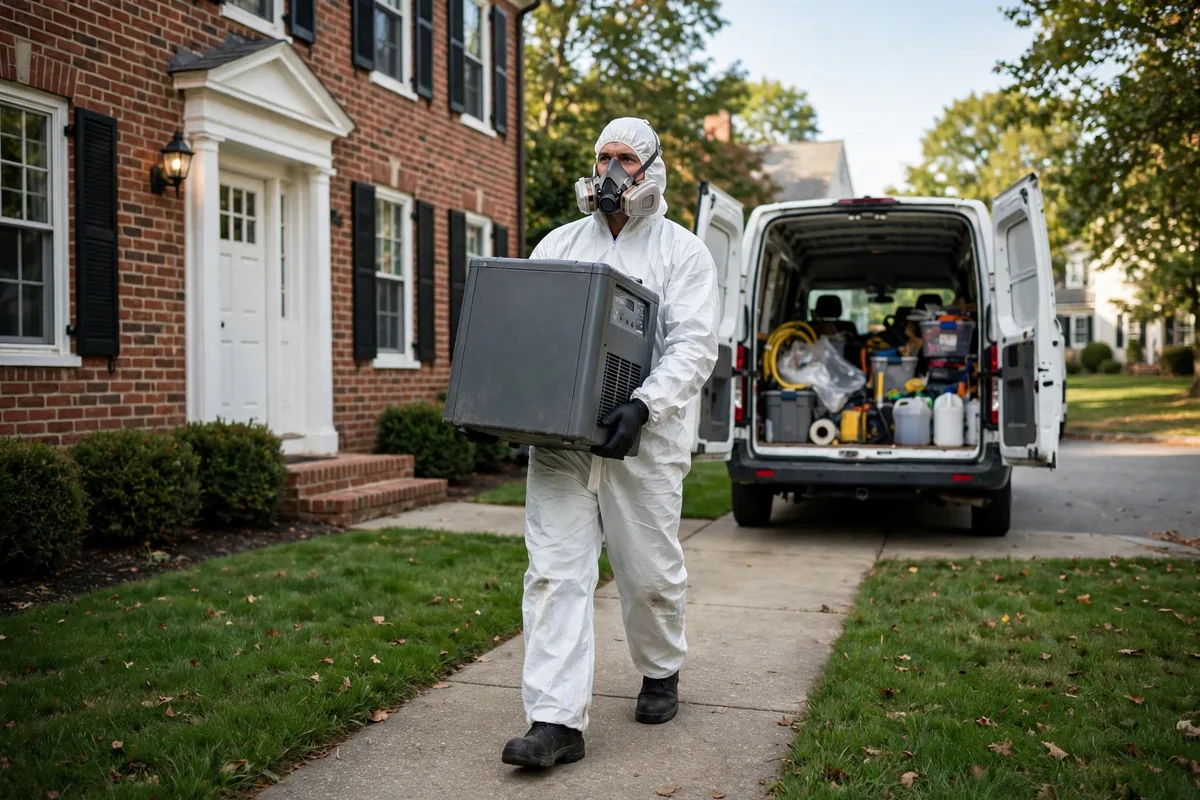
You can't remediate mold well in Kearny without understanding the town itself. This is the local picture that shapes every inspection we do here.
Kearny's western edge is the Passaic, and Riverbank Park puts residents right beside it. That proximity means higher ambient humidity year-round and genuine flood exposure during major storms , the two biggest mold drivers in town.
The old industrial waterfront at Kearny Point is being reborn as workspaces and studios. These big brick-and-steel buildings have flat roofs and deep floor plates that trap moisture, and they need industrial-grade assessment rather than a residential checklist.
Much of Kearny's housing is early-1900s brick rowhouses and multi-family buildings. Shared walls, aging mortar, and century-old plumbing stacks create moisture pathways that single-family suburbs simply don't have.
Parts of South Kearny sit low enough that street flooding isn't rare in heavy rain. If your block ponds water, your basement is effectively in the splash zone , grading, sump pumps, and backflow prevention matter as much as any remediation.
Our crews cover the whole town , from Arlington and West Arlington down to South Kearny and Schuylers Corner , so no matter where moisture shows up, a local team is never far away.
From Arlington and West Arlington to South Kearny and Schuylers Corner, our crews know how moisture shows up across town. Each neighborhood gets a remediation plan shaped to its buildings and its damp spots.
Aging infrastructure and steady humidity leave Town Center's older buildings open to mold growth. Our team serves Kearny for mold work.
South Kearny's industrial areas can lead to unique mold challenges, especially in commercial properties. We're familiar with the layout and can navigate efficiently.
North Kearny features many residential homes that may experience mold due to poor ventilation. Our team covers Kearny neighborhoods.
Kearny Point is a busy area with commercial properties that require regular mold inspections. We can schedule regular visits to ensure compliance and safety.
Every home is different, but our approach isn't. Here is what a typical engagement looks like, drawn from the kinds of jobs we do across Kearny.
After a heavy storm pushed water into a finished basement, we extracted the standing water, removed the soaked lower drywall, and ran commercial dehumidifiers and air scrubbers until moisture readings normalized. Clearance testing confirmed the space was clean before we left.
The homeowner noticed a musty smell upstairs every summer. Thermal imaging found mold on the roof sheathing, fed by a bathroom fan venting straight into the attic , a classic. We remediated the sheathing, rerouted the vent outside, and the smell never came back.
Staff in a converted industrial unit reported musty odors and allergy flare-ups. We found mold in the HVAC plenum and ductwork, cleaned the system under containment, and applied an antimicrobial treatment. Follow-up air sampling showed the space back within normal ranges.
Kearny's riverside setting gives each season its own mold personality. Here is what to watch for, quarter by quarter.

Nor'easters and April downpours test every basement in Kearny. River levels rise, storm drains clog with debris, and the homes nearest the Passaic take on water.
Humid air off the river settles into poorly ventilated attics and crawl spaces. Brick rowhouses bake all day and release heat all night, driving condensation inside wall cavities.
Falling leaves clog gutters and pile against foundations, holding moisture against the house for weeks. In Kearny's older neighborhoods, that means wet basements by November.
Heating dries the air but creates condensation on cold basement walls and windows. Pipes in exterior walls can sweat , or freeze and burst.
Elite Mold Experts extends its Mold Remediation services beyond Kearny to several nearby cities, ensuring complete coverage for our clients.

Harrison's mold problems start with the Passaic River, and Elite Mold Experts remediates homes along its banks.
Local coverage and details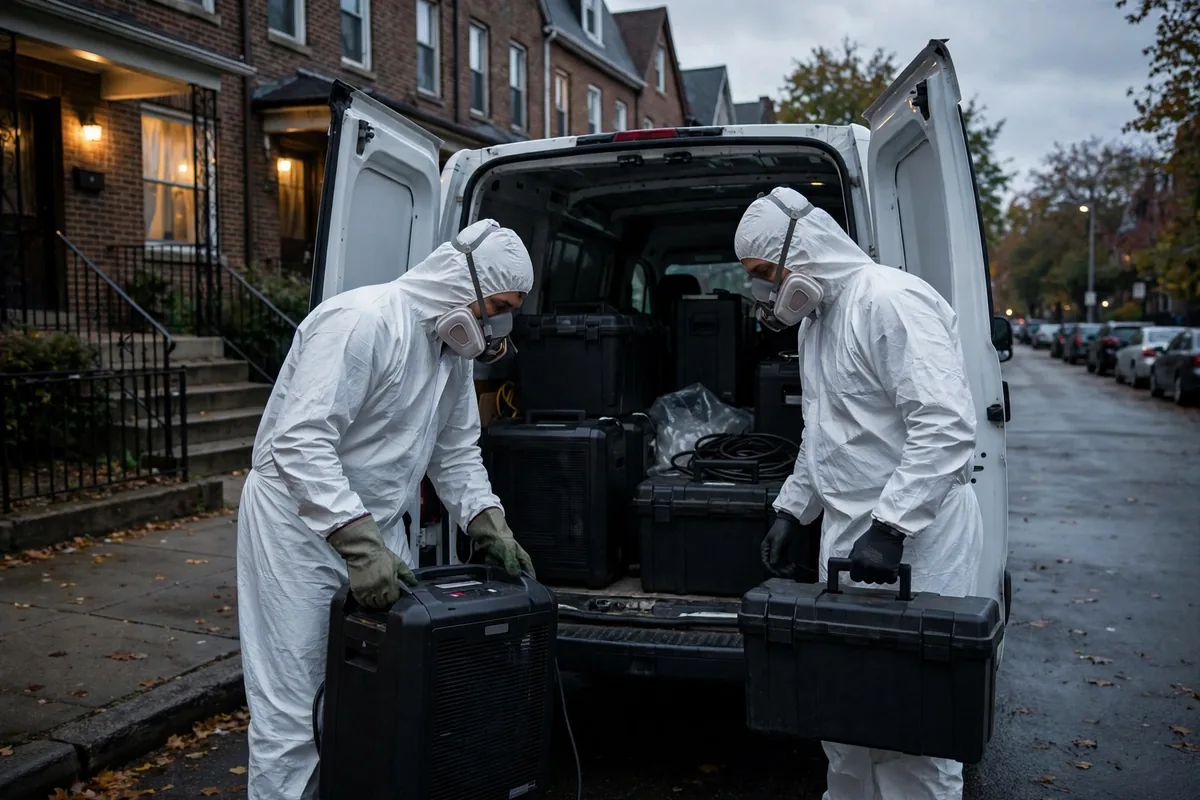
Jersey City holds two mold climates, and Elite Mold Experts remediates both.
Local coverage and details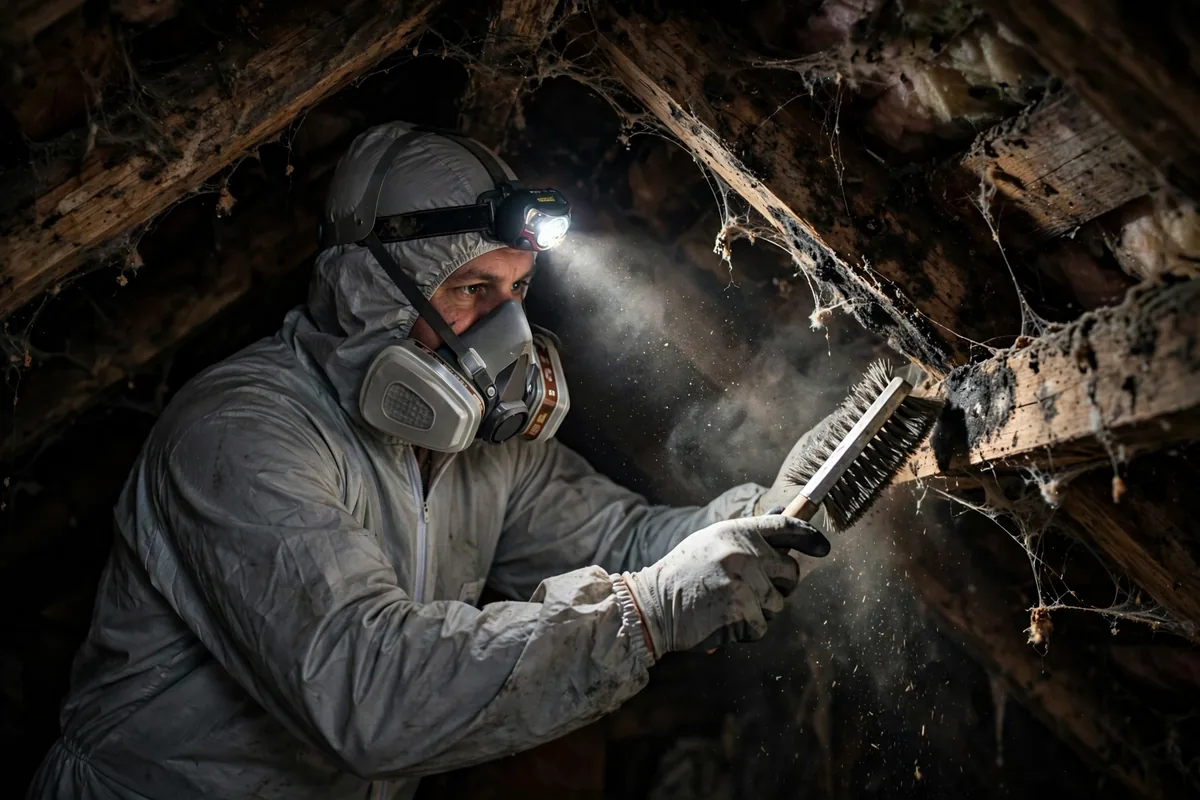
Secaucus fights water first and mold second, and Elite Mold Experts builds remediation for Meadowlands conditions.
Local coverage and details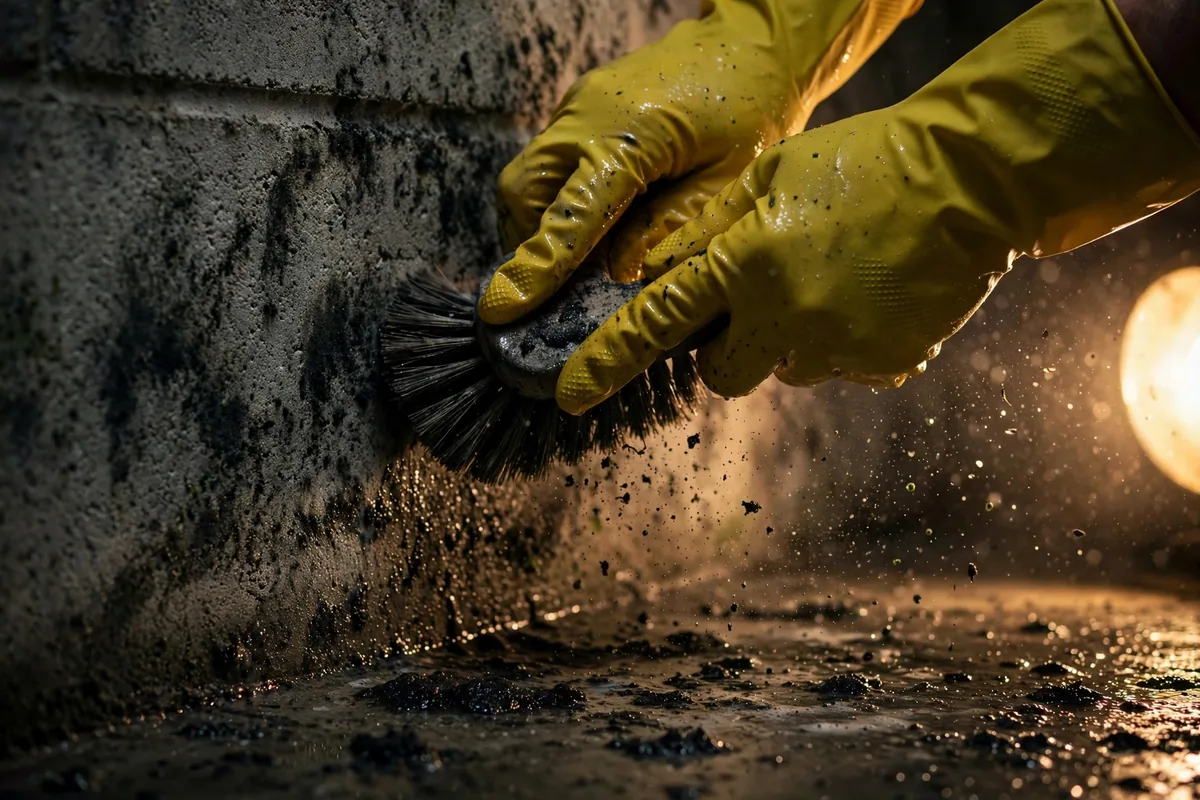
North Arlington's ridge above the Passaic River shapes every mold job, and Elite Mold Experts remediates with that geography in mind.
Local coverage and details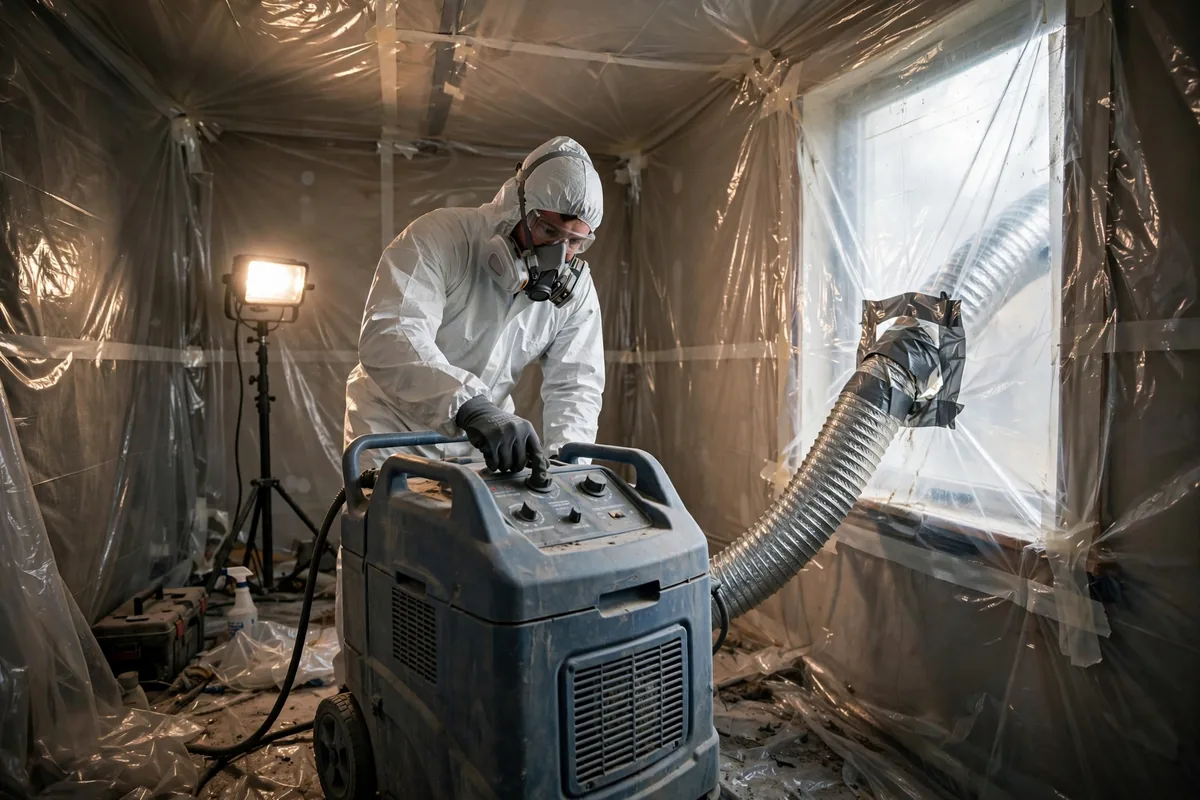
Lyndhurst mold work starts with water, and Elite Mold Experts addresses moisture before mold.
Local coverage and details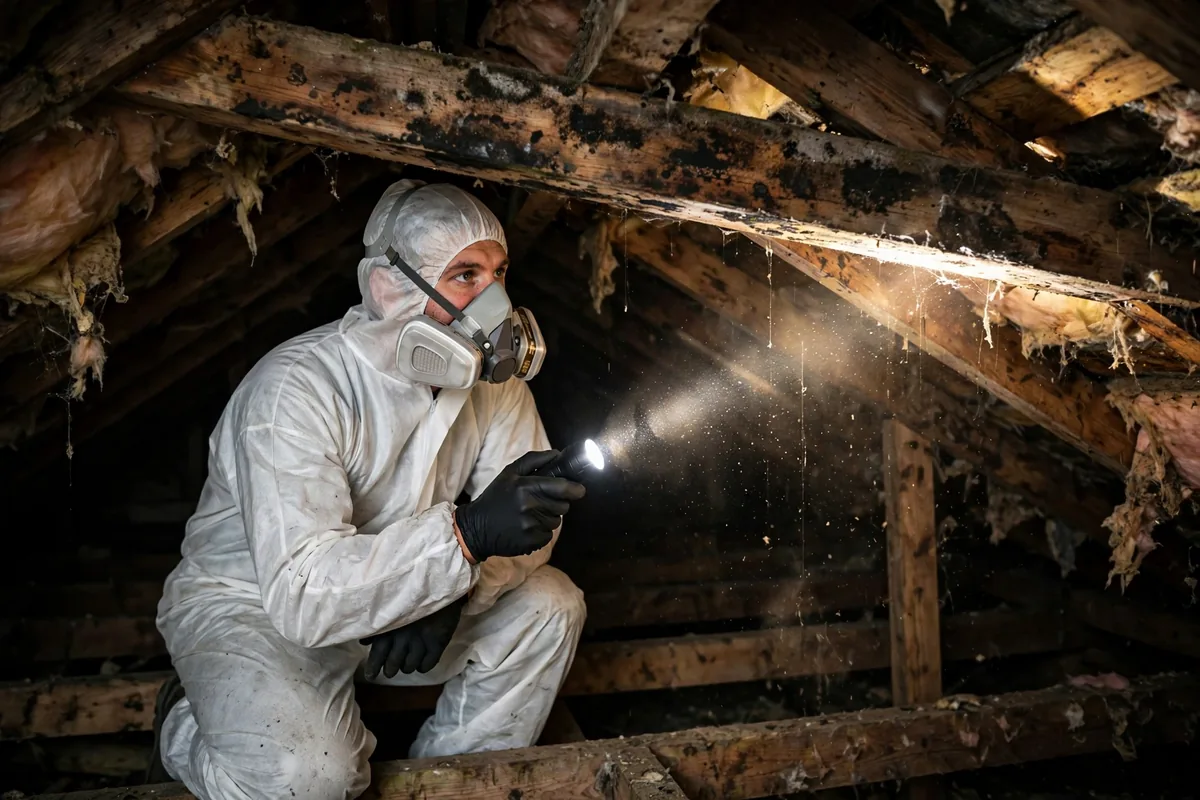
Brick apartment buildings and multi-family blocks drive mold work in East Orange, where dense construction and hot summers trap moisture.
Local coverage and details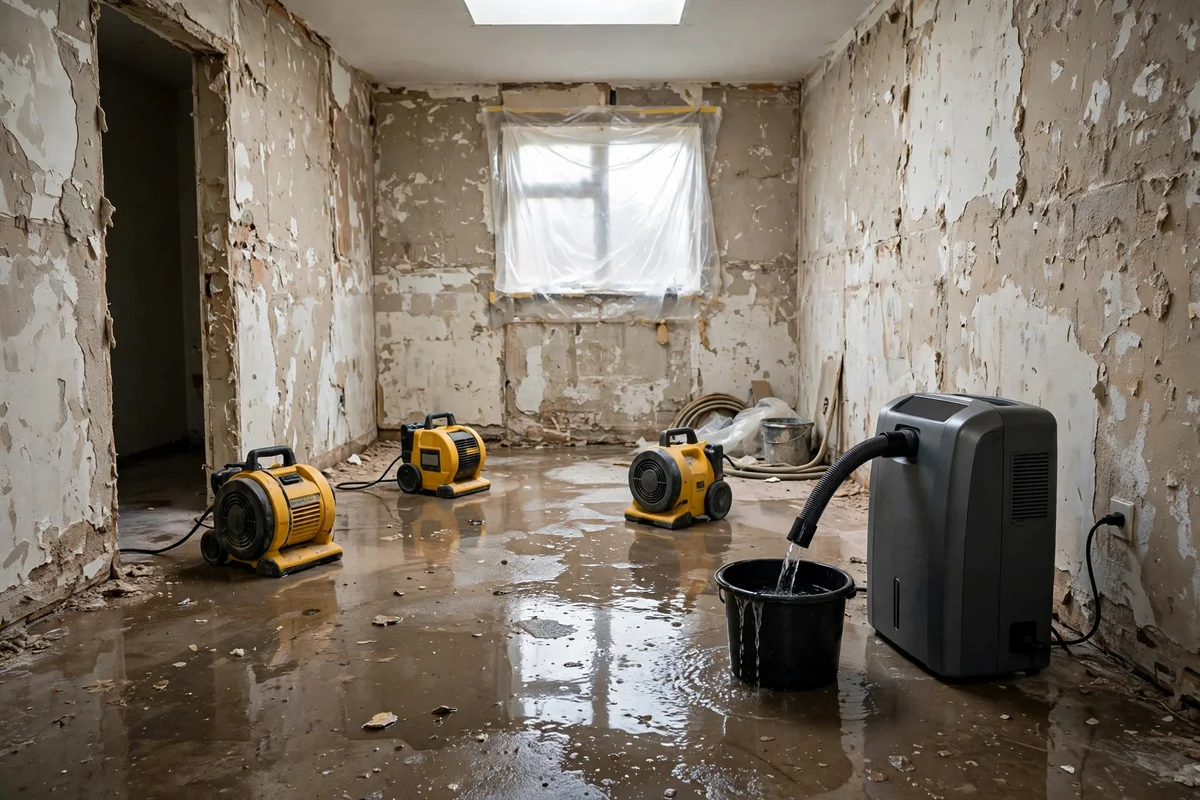
Yes, Elite Mold Experts remediates mold in Bayonne, where a narrow peninsula with water on three sides keeps air humid and the water table high.
Local coverage and details
Belleville's pre-war homes carry basements, plaster walls, and aging pipes that give mold steady openings, and Elite Mold Experts remediates them.
Local coverage and detailsZIP codes we serve in Kearny: 07032
Yes. Homes near the river, especially around Riverbank Park and the low-lying areas toward Kearny Point, deal with higher ambient humidity and greater flood exposure. That does not make mold inevitable, but it does mean basements and ground floors need better moisture control: working gutters, grading that slopes away from the house, and a dehumidifier during the humid months. If your basement smells musty after heavy rain, get an inspection before it spreads.
Recurring spring dampness usually means water is finding the same path in every year, often through aging mortar joints, a failing foundation coating, or poor exterior grading. Remediation removes the existing mold, but the permanent fix is stopping the water: repointing mortar, sealing the foundation, improving drainage, and sometimes adding a sump pump. We identify the entry point during inspection so you are not repeating the same job twice.
They are different, not necessarily harder. Old industrial buildings have flat roofs, big open volumes, and ventilation systems designed for factories, not people. Mold often hides in roof decking, wall cavities, and old ductwork. We use industrial-grade containment and air scrubbers sized for the space, and we test more aggressively because the volumes are larger. If you run a business in one of these buildings, regular inspections are worth it.
We offer emergency response in Kearny. The critical window is the first 24 to 48 hours after water intrusion, that is when mold takes hold inside walls and under flooring. Call us as soon as the water recedes, or while it is still being pumped out, and we will prioritize water extraction and drying. Fast drying is the difference between a cleanup and a full remediation.
Yes. Much of Kearny's housing stock is two- and three-family homes, and mold in one unit often affects the whole building through shared walls and plumbing chases. We document findings clearly for landlords, coordinate access with tenants, and can phase the work unit by unit. We also provide the written reports landlords need for their records.
Question about a Kearny property? Our team explains how an inspection runs and what the report gives you.
Ask the local team
Thinking of painting over mold? Learn what mold-resistant paint and drywall actually do, where they help,…
Read article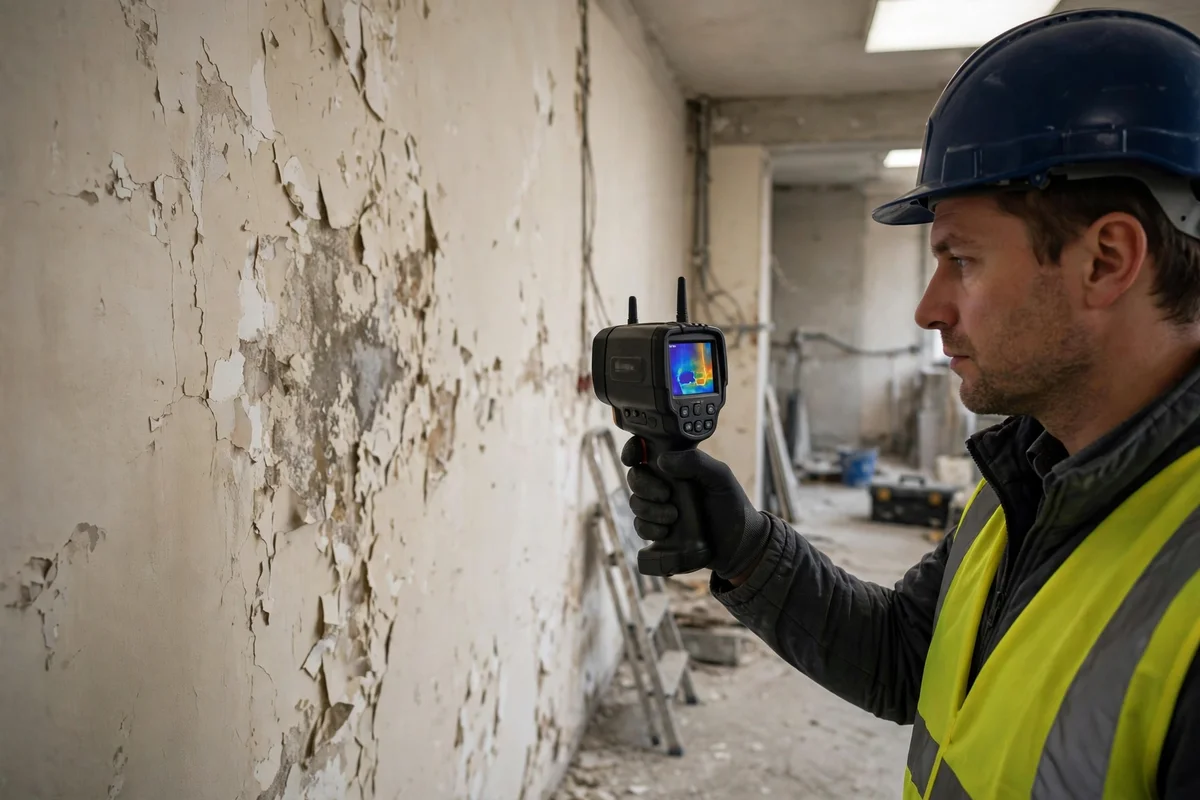
Suspect mold inside your walls? Learn 7 ways to detect hidden wall mold, smells, moisture meters, thermal…
Read article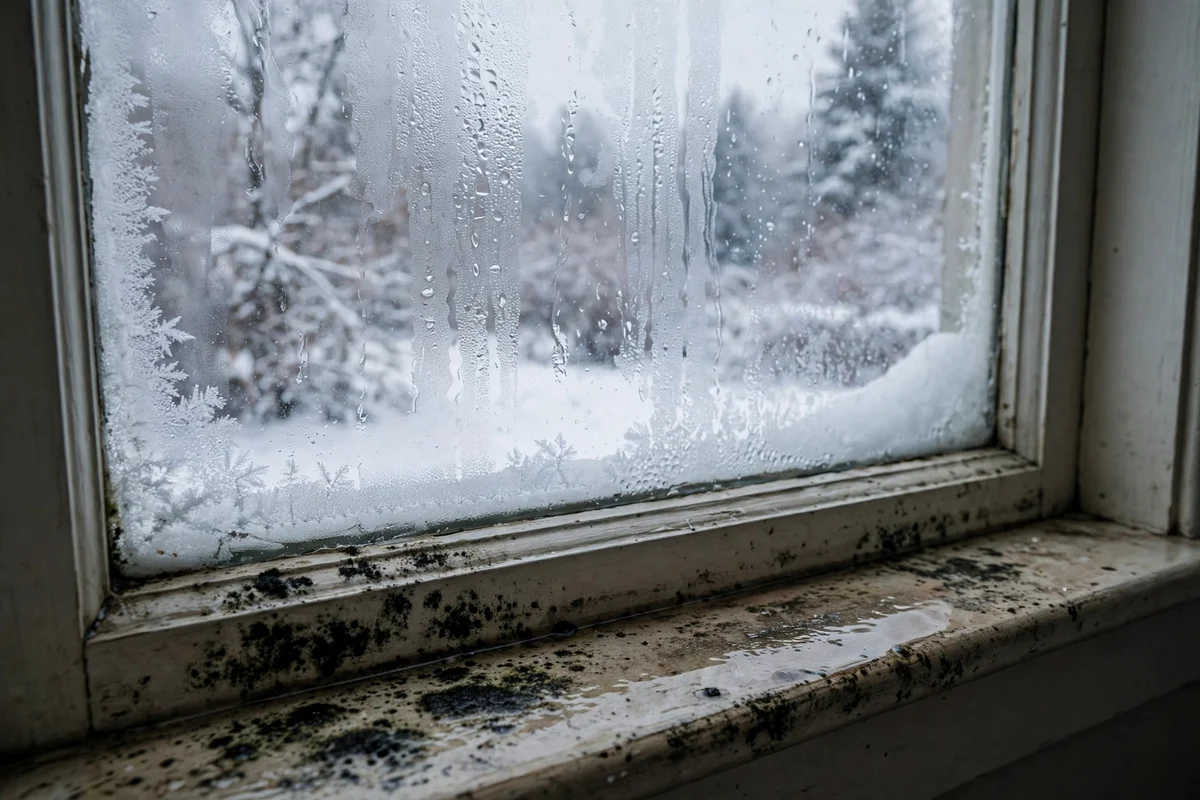
Why does mold spike every winter in New Jersey? Learn how condensation forms, the 5 spots to check, and…
Read article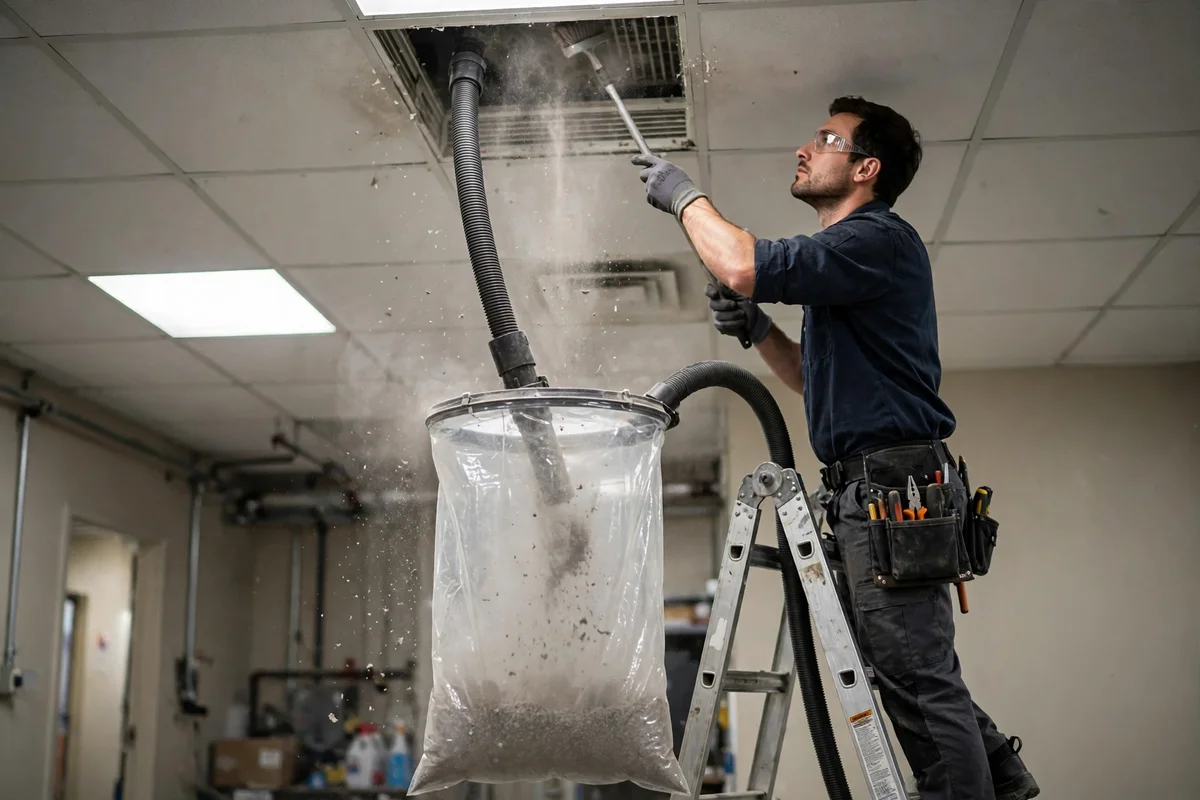
Discover what HVAC air duct cleaning can and cannot do about black mold in Newark. Understand the process…
Read article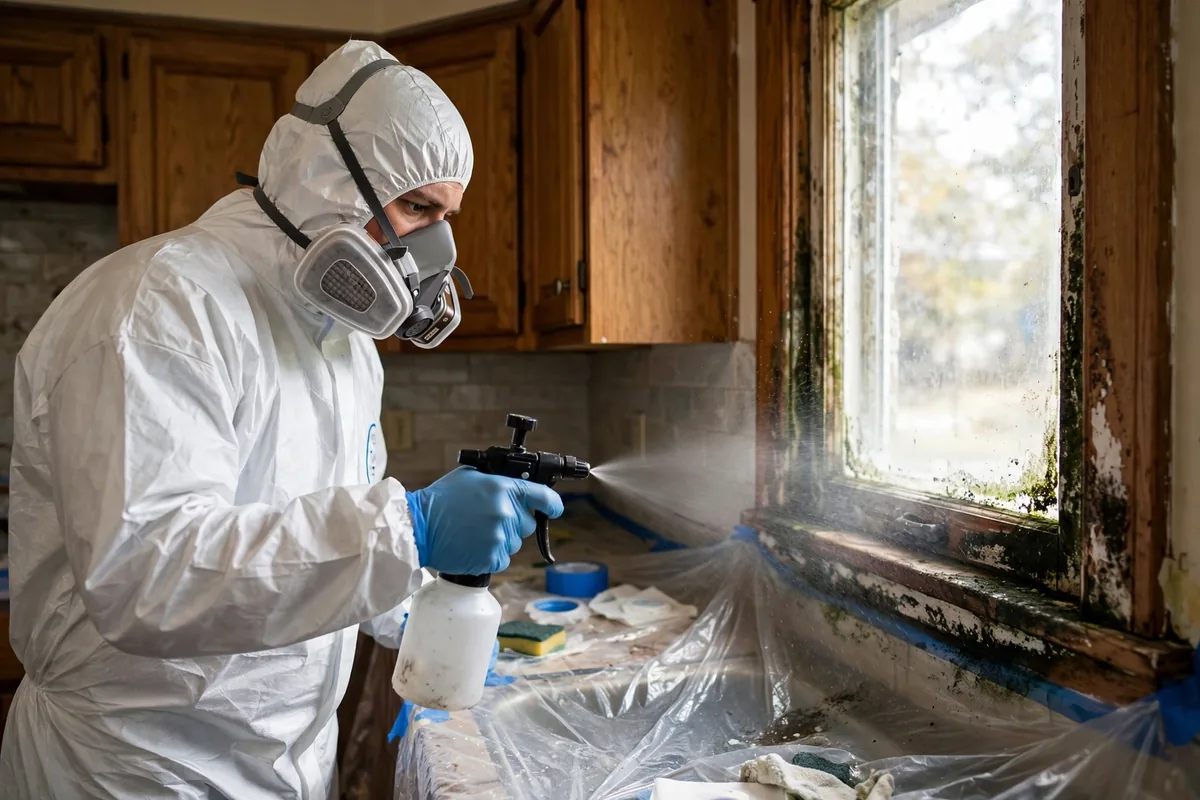
In New Jersey humidity, a small patch can spread quickly. Call today and we will set up your inspection.
Call (973) 400-5618